I was in Manhattan recently to sing in Carnegie Hall. When I lived in New Jersey, I would often enjoy a weekend in the Big Apple. I didn’t realize that just as I was moving to Tucson, Arizona, Broadway had added pedestrian areas. Along with being able to walk more freely (I remember being wall-to-wall people on the sidewalks), chairs and tables are available for general use. One area even has a reading library to enjoy while sitting in some shade. Shade is very important when it’s in the mid-90s with high humidity!
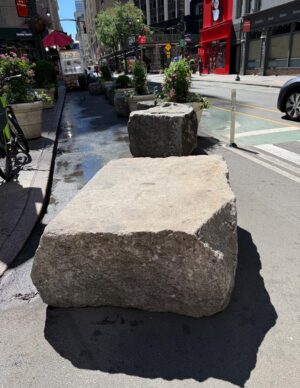
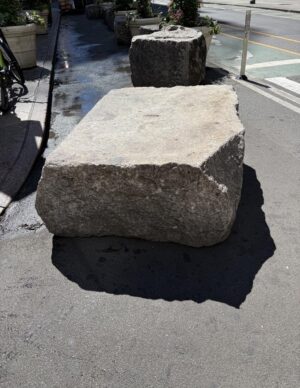
To protect the pedestrian area, several deterrents are being used. There were the usual posts, very nice planters, and very large stone blocks. I hadn’t seen blocks like that before, so I was curious.
Functional, Historic, and Sustainable Art
What struck me was that not only would these rocks stop a vehicle, but the shape allowed people to sit on them! Very nice.
Where did they come from? These rocks, also called Belgian blocks, are recycled from the city’s infrastructure. Belgian blocks are quarried granite, shaped into uniform rectangular or cube shapes. The tops are usually flat. They are saved from historic bridge rehabilitation and road projects. The blocks are described by officials as “sustainable and blending into the urban aesthetic.”
Interestingly, you can find out where each block came from. Yes, each rock comes with its recorded history. Amazing, practical, and aesthetically pleasing.
From Big Apple Boulders to Desert Rocks
Spotting these historic stones made me appreciate how urban environments can repurpose natural resources. Back home in the Sonoran Desert, rocks play a completely different, vital role for our local wildlife—providing the perfect camouflage and shelter for native reptiles!
If you love uncovering the hidden secrets of the natural world, check out my picture book Don’t Make Me Rattle to learn all about how desert creatures utilize their rocky environments to stay safe and protect our ecosystem.