My local grocery store often offers bags of discounted produce, and I am always on the hunt for healthy treats for my reptiles. Recently, I snagged a $1 bag of rutabagas. I know my tortoises enjoy them for a little dietary variety, and while I’ve offered them raw, they seem to much prefer them cooked. I don’t mind the extra prep—I might even enjoy a serving myself!
As I was prepping the food plates, a visiting friend remarked, “Oh, you’re feeding them swedes!”
“Swedes?” I asked, holding up the tuber. “These are rutabagas.”
She explained that in most of the rest of the world, that is exactly what they are called. Intrigued, I did what any biologist would do: I went to the data.
The Science of the “Baggy Root”
It turns out my friend was right. While we call it a rutabaga, the term “swede” is the global standard. The name “rutabaga” actually comes from the Swedish word rotabagge, which translates to—believe it or not—”baggy root.” I’m still trying to figure out how a root looks “baggy,” but nature works in mysterious ways!
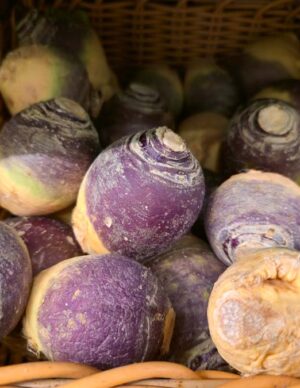
Scientifically known as Brassica napus var. napobrassica, the rutabaga is a fascinating hybrid. It originated in Scandinavia as a cross between a turnip (Brassica rapa) and a cabbage (Brassica oleracea).
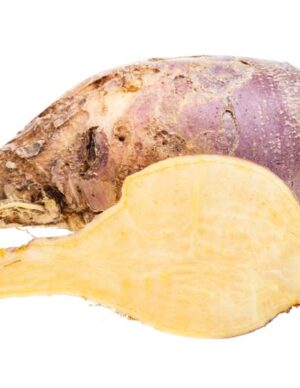
A Botanical Mystery
As a scientist, I find the genetics here quite interesting. When the turnip and cabbage were crossed, the resulting plant doubled its chromosomes. I often wonder what those early botanists were thinking during those long Scandinavian winter nights. Perhaps, bored with a limited winter diet, they thought, “When the sun returns, let’s see what happens if we cross this white root with this green leaf!”
The result is a yellow-fleshed tuber packed with carotenoid pigments and a significant amount of Vitamin C (about 30% of your daily recommended dose). While there are white-fleshed varieties out there, the “American Purple Top” with its yellow interior is what we usually see. It’s still a bit of a mystery to me how a white root and a green vegetable produced such a vibrant yellow result—nature’s own little kitchen experiment!
A Treat for Humans and Herps
While rutabagas provide sustenance for humans and livestock alike, my reptile family members are the real fans. Whether shredded raw or lightly cooked, they find it to be a delicious occasional treat.
Whether you choose to relish a roasted rutabaga or savor a sweet swede, we should all take a moment to look a little closer at the vegetables we consume. There is a whole world of history and biology hidden in the produce aisle!
Want to learn more about what makes desert animals (and their diets) so unique? Check out my educational workbooks!