The chorus I sing with, the Tucson Masterworks Chorale (TMC), is premiering a very special work this spring. Our Artistic Director, Luke Diamond, has embarked on an ambitious project to write songs for each of the 63 U.S. National Parks. In April, the first ten pieces will debut, including songs for Yosemite, Grand Teton, Acadia, and our very own Saguaro and Grand Canyon. The program is appropriately titled “Breathing in the Awe.”
TMC also intends to produce a professional recording of these pieces. I’m currently on the committee raising funds for this first-of-its-kind effort. If you’d like to contribute to bringing this musical tribute to our public lands to life, please drop me a line!
How is a National Park Created?
During rehearsals, Luke asked us to present on different aspects of the featured parks. I was assigned a topic that piqued my scientific curiosity: “How is a National Park Created?” I decided to use Saguaro National Park as my case study.
Becoming a U.S. National Park is a complicated process that requires much more than just a beautiful view; it requires an Act of Congress. Initially, an area of natural or cultural value is identified by the public or local officials. Once a congressperson introduces legislation, the National Park Service (NPS) conducts a study based on four strict criteria:
- Significance: Is the area unique enough to be of national importance?
- Suitability: Is it accessible and representative of a resource not already protected?
- Feasibility: Can the NPS manage it effectively and affordably?
- Management Requirement: Is NPS management actually necessary, or would another agency be better?
Once the study is complete, recommendations go to the Secretary of the Interior, the President, and Congress for a final vote and signature.
The 61-Year Wait for Saguaro
I was surprised to learn that Saguaro National Park’s journey took much longer than I expected. It began in the 1920s when the University of Arizona’s Natural History Society championed the protection of the giant saguaro cacti (Carnegiea gigantea) from land clearing.
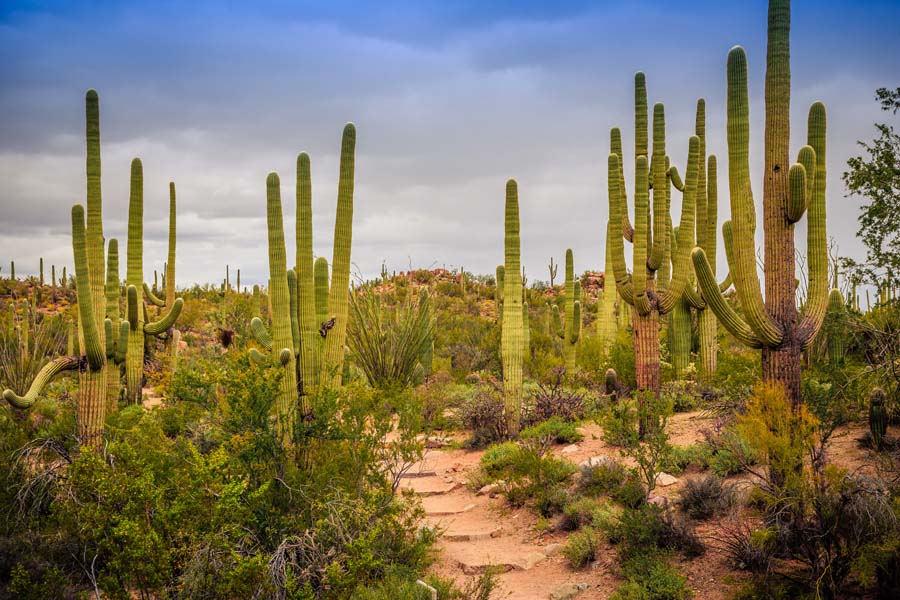
Here is the timeline of Saguaro’s slow evolution:
- 1933: President Hoover declared the Rincon Mountain area a National Monument under the Antiquities Act. This provided protection, but it wasn’t permanent or “Park” status.
- 1961: President Kennedy added the Tucson Mountain District (Saguaro West).
- 1994: Finally, after over a decade of intense lobbying and 61 years of consideration spanning eleven presidencies, President Clinton signed the bill officially creating Saguaro National Park.
By comparison, the Grand Canyon was a “speedster,” taking only about nine years from the first legislation to the final signature in 1919.
Protecting Arizona’s Future
While I value the careful consideration required for park status, I worry that many worthy areas might be lost to development before they receive permanent protection. Currently, Arizona is home to many incredible National Monuments managed by the NPS or the Bureau of Land Management (BLM), such as:
- Organ Pipe Cactus National Monument: A stunning International Biosphere Reserve.
- Ironwood Forest National Monument: Protecting ancient trees and bighorn sheep.
- Chiricahua National Monument: Famous for its “Wonderland of Rocks.”
- Vermilion Cliffs National Monument: Home to deep canyons and the iconic Paria Canyon.
All of these areas are worthy of our admiration and permanent protection. Hopefully, in the years to come, we will see many of them recognized as National Parks.
Learn more about the animals that call these parks home! Many of my “Don’t” series books feature animals found right here in Saguaro National Park and our local monuments. Explore the wonders of the Sonoran Desert through my downloadable workbooks. Browse Educational Workbooks & Activities