I’ve joined a new chorus, which I’m really enjoying. We rehearse in a room in a local mall. It’s actually quite a large room in the middle of assorted smaller rooms, so there can be multiple activities happening at the same time. The other rooms aren’t important to this story; I’m just setting the scene.
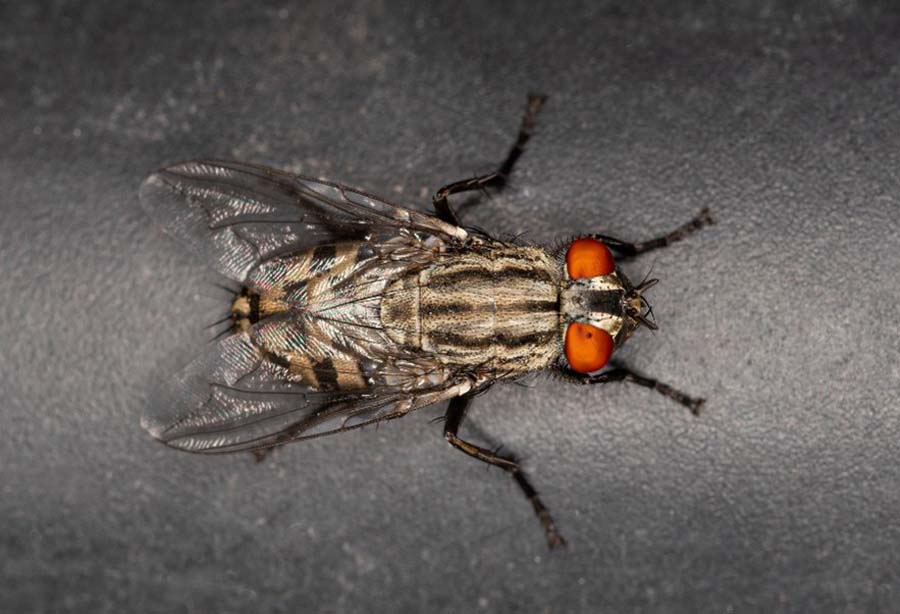
At the first meeting, I was bothered by a fly, a common house fly (Musca domestica). This wasn’t particularly surprising since the fly population was surging both outside and inside. The monsoon rains and summer heat increased the moist organic matter and decaying vegetation ideal for fly breeding. The same heat drives the flies into buildings in search of cooled air, along with water and other food choices.
Speaking of food, did you know that house flies only consume liquids? Their sponging mouthparts liquefy solid foods for consumption. I had no desire to be liquefied!
I swatted at it a few times and kept singing.
Generational Harassment in the Choir Room
The following week, the annoying fly was still there and still much too interested in me. I swatted a bit more energetically and encouraged it to move on, either away to a different place in the room or at least to another person.
Week three, the fly was still there! Just how long do house flies live? Adult flies live two to four weeks. Okay, if the fly had recently matured before the first rehearsal, this could be the same fly. However, eggs can hatch in seven to fifteen days.
My fears were confirmed at the fourth rehearsal. The fly was still there! This couldn’t be the same fly; they don’t live that long. I’m convinced the first fly taught one of its offspring to carry on tormenting me! I was going to have to withstand generational fly harassment!
Should Flies Star in a Science-Based Children’s Book?
Towards the end of the three-month rehearsal period, I was relieved to find the flies had either departed or died out. Despite being a biologist and enjoying all animals, I don’t miss them.
I like to feature unappreciated animals in my science-based children’s books. I wonder if I should write a book about flies…
While we wait to see if Musca domestica earns its own starring role, you can introduce the young readers in your life to other misunderstood creatures of the Sonoran Desert and The Bahamas! Explore Elaine A. Powers’ full catalog of science-based children’s books and downloadable workbooks to spark curiosity about the fascinating, unappreciated animals that keep our ecosystems running.