One of the culinary delights I sought on my recent visit to Manhattan was a pastrami on rye sandwich. A real New York pastrami on rye sandwich! The pastrami I get outside of NYC tends to be too salty, a bit dry, and simply not as flavorful. I can find rye bread at home, but recently I haven’t been able to find any options baked with caraway seeds. I’ve heard people don’t like the little seeds getting stuck in their teeth, but to me, they are essential.
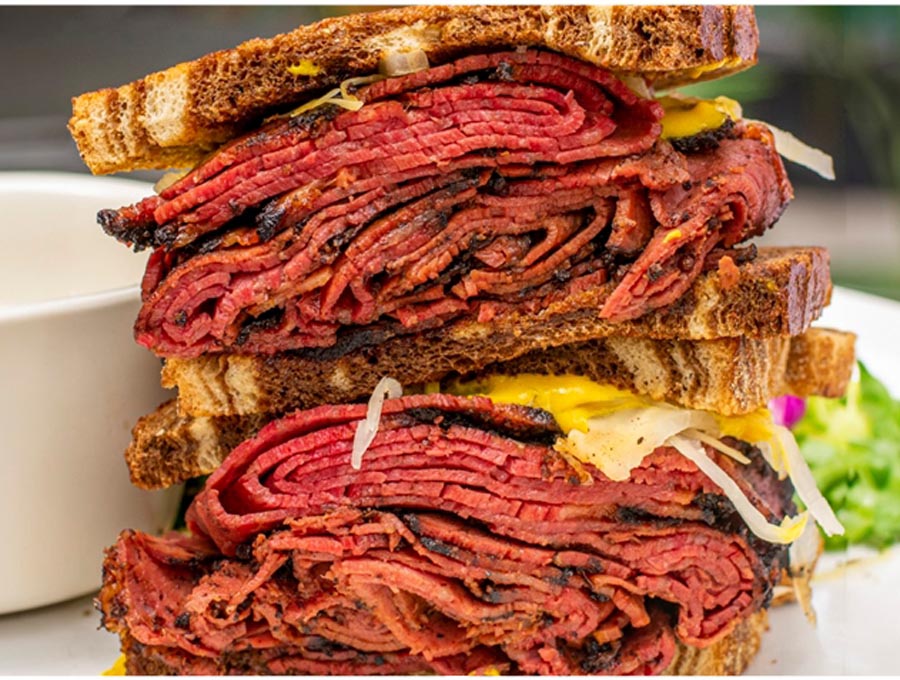
Consequently, the first meal I had upon arriving was a pastrami Reuben at the Carnegie Diner and Café (which is not related to the famous, historic Carnegie Deli). The menu photo showed incredibly juicy, vibrant red meat. While that photo featured marble rye, my actual sandwich was served on classic rye with caraway seeds.
A Flavor Explosion Worth Savoring
The first bite exploded with flavor. The crispy rye bread perfectly complemented the juicy, flavorful meat, with none of that overly salty taste I usually encounter. I admit I savored each bite, taking my time and truly enjoying my meal. In fact, I ate so deliberately that the waiter eventually came over to ask if I wanted a doggy bag! I assured him I would finish it—and I did.
The meal consisted of the pastrami sandwich with cole slaw and sauerkraut served on the side. Serving it that way lets you decide exactly how you want to complete your sandwich. Naturally, the crisp dill pickle was the perfect side vegetable.
The Science Behind the Sandwich
So, why does pastrami taste so much better in NYC? As a biologist, I love looking at the mechanics behind why things work, and there are actual, precise reasons for this culinary phenomenon. New Yorkers prepare their pastrami meticulously:
- The Cut: The pastrami is made from the navel cut of the brisket, which is known for being fattier and juicier. This specific cut produces a much more flavorful taste and a richer texture.
- The Cure: The meat is brined for weeks, coated in coarse coriander and black pepper, and then slowly smoked for hours.
- The Steam: Once it is ready to be sold, the meat is held in specialized steam tables. This environment further breaks down the tough muscle fibers and beautifully renders the fat. To top it off, the meat is frequently carved by hand to preserve the texture.
The exact same care is taken with the rye bread. NYC bakeries utilize local, ambient airborne yeasts along with local water to create a completely unique flavor profile and crumb texture. These environmental factors are incredibly hard to replicate elsewhere!
The original baking recipes were brought to New York by Eastern European and Jewish immigrants. The authentic bread is made by combining high-gluten wheat flour (80%) with dark rye flour (20%) using naturally fermented sourdough starters. Commercial, fast-acting yeast simply doesn’t allow the complex starches and sugars time to develop. Finally, traditional bread spices like caraway seeds are added to the mix. I’m so glad they are, because that distinct flavor perfectly balances the richness of pastrami and corned beef.
I thoroughly enjoyed my dining experience in NYC. I am already looking forward to my next visit, where I will definitely seek out authentic pastrami and rye bread again. It might actually be reason enough to book a flight!
From Culinary Chemistry to Island Adaptation
Just like the unique airborne yeasts of New York shape its iconic bread, isolated island environments shape the incredible animals that live there! If you love learning how different environments affect the life within them, join my favorite reptile protagonist on his adventures in the Caribbean.